April Newsletter 2012
 |
|||||||||||||||
Welcome to the Thoughtful Inquirer—brought to you by the creators of Inquire: A Guide to 21st Century Learning. Every other week, this newsletter presents insightful articles about 21st century skills, inquiry, project-based learning, media literacy, and education reform. Get Smart; Become TalentedRobert King Belief that you can become smarter and more talented opens the doorways to success. That’s what twenty years of research has shown Carol Dweck of Stanford University. She has identified two opposing beliefs about intelligence and talent, beliefs that strongly impact our ability to learn. 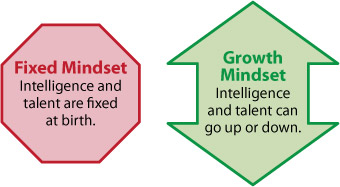 Though the fixed mindset has traditionally held sway, many recent studies show that the growth mindset better represents our abilities. Our brains are much more elastic than previously thought, constantly growing new connections. IQ and talent are not fixed, but are mutable based on experience and attitude. In her book Mindset, Dweck outlines the dramatic effect that these opposing beliefs have on learners:
[Read more.] |
|||||||||||||||
 |
|||||||||||||||
|
|||||||||||||||
In the NewsRecent articles on 21st century skills, inquiry, project-based learning, media literacy, and education reform C.R.E.W.: Freedom To Explore Brings Responsibility In the Columbus Dispatch, Charlie Boss reports about an innovative program that helps high-performing students become Creative Responsible Energetic Workers. At the Hannah Ashton Middle School, students who score highest in state aptitude tests join the C.R.E.W., enjoying greater freedom in and shouldering more responsibility for their own educations. The program demonstrates that rigor, achievement, and fun can go hand-in-hand. Teach Students How to Be a Positive Influence Writing for the ASCD Education Update blog, Brad Kuntz advocates teaching students how to become responsible and involved members of their communities. He provides numerous suggestions for getting students engaged beyond the school walls, with civic groups and local government. Help Map the Retinal Connectome The EyeWire Web site gives students, teachers, and anyone else the chance to aid in neural research by playing a coloring game. Mapping the neural networks of a human retina is a first step in mapping other neural networks, but it is a huge undertaking. Computers can do only so much. Users who can color “between the lines” can help map these neurons, advancing science through crowd-sourcing. Why Bilinguals Are Smarter In the New York Times, Yudhijit Bhattacharjee cites recent studies that indicate that bilingualism improves intelligence and can even help safeguard a brain against dementia. The bilingual brain has both language systems running simultaneously, but instead of hindering thought, this overlap actually amplifies it. Bilingualism improves executive function and monitoring of ever-changing conditions. Fourteen Reasons Schools Are Troubled (And No, It’s Not All About Teachers) In the Washington Post, Ronald Willett reports on the numerous challenges that face K-12 education. He dismisses “the big lie” that teachers are the central problem, and outlines other problems, including administrations, school boards, state boards, the “corporate textbook and testing oligarchy,” and misinformed political reformers on the national level. He makes grave predictions of the effects of the teacher-focused reform efforts. The Neuroscience of Your Brain on Fiction Annie Murphy Paul presents a fascinating piece in the New York Times indicating that reading fiction energizes our brains in ways that resemble actual experience. Through brain scans of readers, researchers have seen that sensory imagery and muscular actions in stories excite the same areas of the brain that senses and actions excite in real life. These scientific studies support what readers have long experienced—living vicariously through a novel. Want more great articles? Follow @InquireBook on Twitter to find similar stories every day! |
|||||||||||||||
Thoughtful Learning: Upcoming EventsASCD Convention (Association for Supervision and Curriculum Development) Thoughtful Learning exhibited at the ASCD annual conference from March 24–26 at the Pennsylvania Convention Center in Philadelphia, PA. What a great show! Thanks to everyone who stopped by to see us. In Focus: Improving Social and Emotional Intelligence, One Day at a Time We are developing a new line of products titled In Focus: Improving Social and Emotional Intelligence, One Day at a Time. The author of the line, Thomas McSheehy, has taught elementary school for 21 years and has been a social worker and family therapist for 16 years. Each book (K–2, 3–5, 6–8) provides concise daily activities to help your students develop their social and emotional intelligence by
For more information, download a free sampler of In Focus grades 6–8. Also, watch for more in future editions of the Thoughtful Inquirer! |
|||||||||||||||
|
Copyright © 2012 ThoughtfulLearning. All rights reserved. For permission to reprint material from this newsletter, please write to contact@thoughtfullearning.com. | |||||||||||||||