Blog Posts for 21st Century Skills

Insightful articles about 21st century skills, inquiry, project-based learning, media literacy, and education reform.

5 Keys to Successful Student Collaborations

As you know, group work can give teachers headaches and students nightmares. If set up poorly, collaborative projects often result in one person doing all of the work, while others contribute minimally or actually disrupt. Arguments, inefficiency, mess, and chaos follow closely.

When set up well, though, group work taps into the power of collaboration. Here are 5 keys to setting up successful student collaborations.

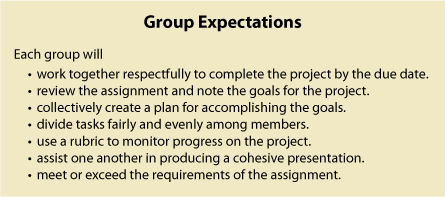
  1. Define group success. The first key to successful student collaboration is to make sure the group members have a common goal. They need to work together to accomplish a specific task. They will either succeed together or fail together. For everyday collaborations, make your expectations clear verbally: "Turn to your partner, discuss page 63, and answer the questions together." For large-scale group assignments, write out what success will look like for each group:
  2. Group Expectations

    Download a free Word template.

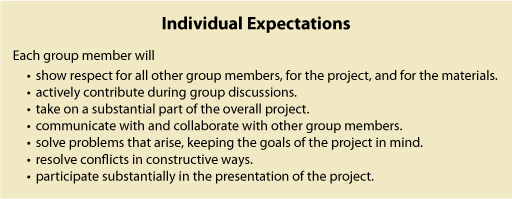
  3. Define individual success. The whole group succeeds or fails together, yes, but you should also establish expectations for individual contributions. For quick collaborations, specify what individual success is: "Each person needs to contribute one answer, and each person will report a different person's answer to the whole class." For larger-scale collaborations, write out what you expect of each group member:
  4. Individual Expectations

    Download a free Word template.

Read more

Vocabulary for Critical Thinking

Mouse Potato

Do you know what a mouse potato is? It’s a person who spends too much time staring at a computer screen. Mouse potatoes are the couch potatoes of the 21st century. In fact, Merriam Webster just added the term mouse potato to its august dictionary.

Perhaps you know a few mouse potatoes. Perhaps you are one. But just learning the term mouse potato suddenly makes you think about how much time you spend in front of the computer. That’s the power of vocabulary. It enables thinking. The size of your vocabulary impacts the size of your mental world.

Vocabulary as Inquiry

All right, so you’re saying, “Here we go—vocabulary. It’s so elementary.” Yes, it is—as in the word element: the building blocks of everything. In fact, the origin of the word elementum is the first three letters of the Canaanite alphabet. When we talk about elements, we are reciting our Canaanite ABCs.

Do you see how one word—elementary—has taken us from language arts to science to social studies? Do you see how knowing that elementum is the same as ABCs influences how we think about the Periodic Table of the Elements, about elementary school, about Holmes’s constant insistence that it is “elementary, my dear Watson”?

A word doesn’t have just one meaning. It is freighted with meaning. In its prefixes, roots, and suffixes, each word stores the DNA of human experience.

Vocabulary therefore shouldn’t be rote memorization. It should be inquiry.

Read more

What does your PLN look like?

You may have heard colleagues talk about their PLNs—their personal learning networks—or you may have one of your own. But just what is a personal learning network, and why is it so helpful for educators?

What is a PLN?

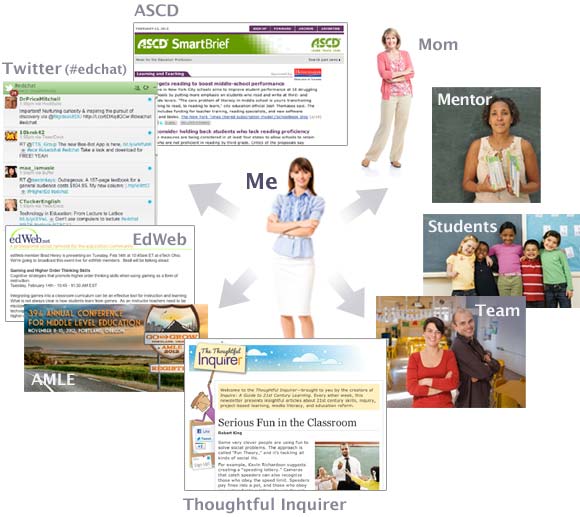
A personal learning network consists of the people, places, and things that help you learn. By definition, every lifelong learner has a PLN, whether the person realizes it or not. Also, every person who has a PLN is a lifelong learner. Let’s imagine, for example, that you are a relatively new teacher. Your PLN might look like the following:

Read more

3 Simple Steps to the 4 C’s

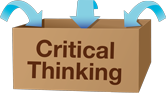
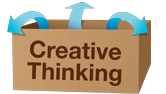
So you’ve heard of the 4 C’s—critical thinking, creative thinking, communicating, and collaborating—but how are you supposed to teach your own subject and the 4 C’s?

The good news is that the 4 C’s help you teach your subject. They aren’t content. They’re skills for gaining content. Here are 3 simple steps that use the 4 C’s to help students learn your subject:

Step 1: Prompt Critical and Creative Thinking

After introducing and modeling a new concept, prompt students to think critically and creatively about it. Assign a 5-minute activity that students complete individually. Here are some examples:

  • Sentence completion: Ask students to complete a sentence in as many ways as possible.
    Complete the following sentence in as many ways as you can: “The cell membrane helps the cell by . . .”
  • Definitions: Ask students to define a key term, providing its denotation, along with examples, synonyms, and antonyms.
    Define the term “executive branch,” giving examples, synonyms, and antonyms.
  • Problem solving: Ask students to list ways that a problem could be solved.
    List as many ways as you can think of that global economic inequality could be reduced.
  • Clustering: Ask students to write an important concept in the center of a piece of paper and to create as many personal connections as they can to it.
    Write “Supply and Demand” in the middle of a piece of paper and circle it. Around it, write ways supply and demand affect your life.
  • Modeling: Ask students to represent a concept visually, whether in a sketch, a diagram, a symbol, or some other form.
    Create a visual representation of entropy—a drawing, diagram, graph, or other visual.
  • Questioning: Ask students to write five questions about the current topic and to pick the most interesting one.
    Write down five questions you have about logarithms and pick the most interesting one.
Read more

Getting the Sense of Sensory Details

As a novelist, I love sensory details: the red scarf, the crumbling cookie, the scent of coming rain. They’re just words, but they can take us away to other places. The right sensory details allow readers to encounter the writer’s experience as if it were their own.

Using the Five Senses

The different senses are weighted individually, bearing unique effects. Understanding how a particular sense impacts the reader can help the writer create specific effects:

  • Seeing is believing: People trust what they see. That’s why eyewitnesses say, “I saw it with my own eyes!” If you want readers to believe something, show them.

    Jackson marched up the street toward Tawni’s house, the present box clutched in his fingers. Up ahead, her front porch light beamed yellow. He slowed on the sidewalk. He’d have to stand on that porch for the whole block to see, ring the bell, wait, and hope.

    A car cruised slowly past, the driver rubbernecking.

    Jackson turned away and peered at the card on top of the present. It was bent. His thumb had pressed a small crater into the drawing of mistletoe.

    He glanced one last time at the glowing porch, then turned toward the street and crossed it, jamming the card into a garbage can waiting in the gutter.

  • Did you hear that? Hearing is about understanding how a person feels or thinks. To reveal characters, have them speak. Hearing is also about speculation. You hear a footstep. You hear running water. Use sounds to create speculation about what is happening.

    Outside Tawni’s window, a garbage can rattled loudly in the street. An old man shouted a threat, and a young man echoed it. Tawni plucked out her earbuds and tiptoed to the window to peek out.

    No one was there. Rain began to patter in the lengthening shadows.

    Shivering, Tawni drew the sash closed, clicked the lock, and dragged down the fluttering shade.

    “Tawni,” came a muffled voice outside her window, “I’m getting soaked.”

    Her breath caught. “Who’s there?”

    “Jackson.”

    Another voice—Daddy yelling from the basement: “Who you talking to, Tawni-Girl?”

    “Nobody, Daddy. It’s just me—singing to my MP3!”

Read more

Knowing the Lake: Serving as Lead Learner

Let’s say four friends decide to do some fall fishing. All four have varying degrees of experience and success with fishing. For this particular outing, however, one individual, Aaron, is better prepared than the others. His grandfather owns a cottage on the lake, and he has fished here far more often than his friends have. So when they get out on the water, the others will naturally ask Aaron when they have questions about depths, structures, and baits. But they will also share their own ideas about fishing in these conditions. In a setting like this, friends simply work together, and, in the process, they learn new things, experience some success (in this case, catch some fish), and have a good time.

A 21st century classroom should function pretty much like the friends in the boat do—with individuals working (and learning) together to achieve a particular goal, and you, the instructor, serving as the lead learner—the person who knows the lake best. As you learn along with your students, you also provide the necessary leadership and guidance to keep the boat afloat and moving in the right direction.

10 Tips for Being a Lead Learner

  • Marvel at and show interest in all types of ideas and events—past, present, and future.
  • Promote learning through inquiry (questioning), collaboration, testing, rethinking, and so on—an authentic process that occurs in the science lab, in the workplace,
    . . . and on the lake.
Read more

Education Reform: Welcoming Strangers

Education Reform: Welcoming Strangers

These days, people talk about xenophobia—the fear of strangers. In the ancient world, though, people had xenophilia—the love of strangers. Locals were expected to welcome travelers into their homes and offer them food and entertainment. After all, strangers brought news from far-off places, gifts of precious spices, music, art, and ideas.

Five Strangers in the Classroom

As we strive to create student-centered classrooms, we need to invite certain strangers into our midst. These strangers may make us uncomfortable, may rock our routines—but they also introduce the wonders of the world. Make sure to welcome the following strangers into your class:

  • Uncertainty: In the teacher-centered model, you control everything, minimizing uncertainty. The problem is that you have to control everything, and that’s a huge burden. In the student-centered model, you and the students share the burden. That means there will be moments of uncertainty. Welcome them. Uncertainty creates space for students to step up, propose a direction, and learn leadership.
  • Shared Responsibility: Oddly enough, education reform has stripped students of responsibility for their success or failure: A bad test grade is somehow the teacher’s fault. Students used to cheat on tests, but now teachers do because they have more at stake. This has to change. Students need to actively seek their education, not passively receive it. After all, they’re the ones who will suffer the consequences of a poor education. Empower students by making them responsible for their own failures and successes.
  • Disagreements: We’ve come to believe that disagreements should be quelled, but a disagreement about ideas is a beautiful thing. If half the class thinks the Westward Expansion was a triumph and the other half thinks it was a tragedy—let them argue! Let them support their positions, use logic, answer objections, and appeal to their opponents. Arguments require engagement, critical thinking, and communication.
Read more

5 Hit Shows Featuring Inquiry and Project-Based Learning

If you or your students are new to inquiry and project-based learning—or if you just need some popular-culture inspiration for your program—you should check out the following hit TV shows. Each one uses the inquiry process to create amazing projects:

  1. Mythbusters on the Discovery Channel is a classic show that investigates modern myths and viral videos, using science to determine whether they are confirmed, plausible, or “busted.” (Let’s face it, the more formal term—burst—doesn’t work as well as busted.) In every episode, Jamie Hyneman, Adam Savage, and their cohorts test myths using the inquiry process. Each show starts with a myth that the team wants to examine.
    • Questioning: The team asks the key questions about the myth. What are its parts? How can we test each part? What are the potential hazards of our testing? How can we use the materials that we have? How can we ensure great TV from picking apart this myth?
    • Planning: The next step often involves sketching ideas, creating scale models, rapid prototyping, and benchmarking. At this point, the team is considering how they can confirm or deny the myth.
    • Researching: When the crew needs to find out more, they search online and even travel off-line to places like NASA or bomb ranges to get the necessary information.
    • Creating: The team gathers the materials and tools they need and builds an experiment for finally testing the myth. They use all sorts of motors, computers, high-speed cameras—and not a little duct tape.
    • Improving: Rarely do things go right the first time, so the team must reevaluate what they are doing. They make adjustments, adding, removing, rearranging, and reworking parts.
    • Presenting: At long last, the team runs the final, definitive test to determine if a myth is true or not—often with surprising results. Recently, Jamie and Adam tried to make a Newton’s cradle out of wrecking balls. That’s radical science!
Read more